

Leave a request
for cost calculation
for cost calculation

MENU
If you want a concrete home in Florida, two systems come up again and again: SCIP (Structural Concrete Insulated Panels) and ICF (Insulated Concrete Forms). Both build strong, insulated, hurricane-resistant homes. But they are built very differently, and the difference matters for cost, speed, and design freedom. Here is an honest comparison for South Florida.
Both SCIP and ICF give you a concrete, insulated, storm-resistant shell. SCIP tends to build faster and adapt to more complex shapes; ICF is a well-established system that many local crews already know. The right choice depends on your design, your lot, and your builder.
Foam-core panels wrapped in steel mesh are stood up on site, then sprayed with shotcrete on both faces to form a monolithic concrete shell. Insulation is in the middle of the panel. See our what is a SCIP panel guide.
Hollow foam blocks (think large interlocking forms) are stacked into walls, then filled with poured concrete. The foam stays in place permanently as insulation on both sides of a solid concrete core.
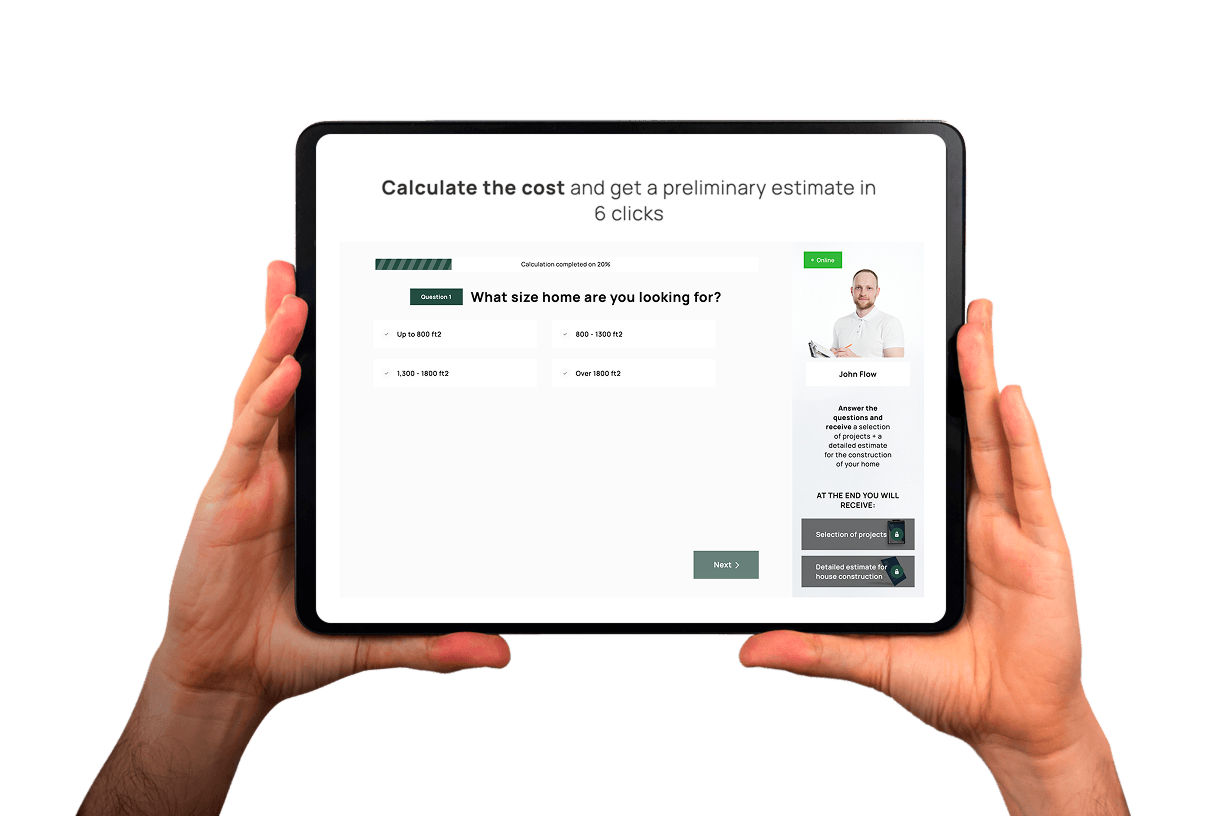
Cost depends far more on your design, lot, and finishes than on the panel acronym. ICF materials are often priced higher per square foot than foam-and-OSB systems, while SCIP can save on labor time. The only way to know your number is a real quote — try our cost calculator or read the SCIP cost guide. (We do not publish generic per-square-foot prices because they are misleading for a specific Florida lot.)
For most hurricane-zone homes, the deciding factors are your builder’s expertise and your design. SCIP shines on fast builds and architecturally complex homes with continuous insulated roofs; ICF is a proven straight-wall system. Either beats traditional wood framing for storm resilience. Compare both to the Florida standard in our SCIP vs concrete block guide.
ICF uses hollow foam forms stacked and filled with poured concrete, with insulation on both sides of a solid concrete core. SCIP uses foam-core panels sprayed with shotcrete on both faces, putting insulation in the middle. SCIP typically builds faster and adapts to complex shapes; ICF is a widely-known straight-wall system.
Yes. Both meet and exceed Florida’s building code, including the High-Velocity Hurricane Zone (HVHZ) requirements in Miami-Dade and Broward, when engineered and permitted correctly.
Neither has a fixed price advantage — total cost depends on design, lot, finishes, and labor. SCIP can save on build time; ICF material costs are often higher. Get a real quote for an accurate comparison.
Want a concrete home engineered for Florida? Talk to GreenFab about your project, or explore our SCIP home plans.
1. Information We Collect
We collect the following types of information:
2. How We Use Your Information
We use your information for the following purposes:
3. How We Share Your Information
We may share your information with the following categories of recipients:
4. Your Choices
5. Data Security
We take reasonable measures to protect your information from unauthorized access, use, or disclosure. However, no method of transmission over the Internet or method of electronic storage is completely secure.
6. Data Retention
We retain your personal information for as long as necessary to fulfill the purposes outlined in this Privacy Policy, unless a longer retention period is required or permitted by law.
7. Children’s Privacy
Our Site is not directed to children under the age of 13. We do not knowingly collect personal information from children under 13. If you are a parent or guardian and believe that your child has provided us with personal information, please contact us, and we will take steps to delete the information.
8. International Data Transfers
If you are accessing our Site from outside the United States, your information may be transferred to and processed in the United States, where our servers are located. The data protection laws of the United States may differ from those of your country.
9. Changes to This Privacy Policy
We may update this Privacy Policy from time to time. We will post any changes on our Site and update the “Last Updated” date above. Your continued use of our Site after the posting of changes constitutes your acceptance of the revised Privacy Policy.
10. Contact Us
If you have any questions about this Privacy Policy, please contact us at:
Greenfab
3255 NE 184th St, North Miami Beach, FL 33160
info@greenfab.house
+1(786)947-4333


Updated:
13.07.2022
